
When you’re buying a home with an attached garage, the last thing you probably think about is the wall between the garage and the rest of the house. But this unsung hero of home safety plays a vital role in protecting your family and your investment.
Let’s talk about why a fire separation wall is such a big deal.
What is a Fire Separation Wall?
In simple terms, a fire separation wall is a barrier that helps slow the spread of flames and toxic fumes from your garage into the living areas of your home in the unfortunate event of a fire.
Since garages often contain flammable materials like gasoline, paint, and propane, having this protective wall is not just a good idea—it’s essential to home safety.
Why Should Homebuyers Care?
Garage fires are more common and dangerous than many people realize.
The most recent official report from the U.S. Fire Administration indicates that an estimated 6,600 residential building garage fires occurred from 2009-2011, resulting in approximately 30 deaths, 400 injuries, and $457 million in property loss.
Notably, 93% of these fires took place in one- and two-family homes, and they tended to be larger and spread farther than fires originating in other areas of the home. One case reported by Firefighter Nation highlights a garage fire that rapidly spread into the living areas due to the lack of a proper fire separation wall, engulfing the home and resulting in significant property damage before firefighters could contain it.
These alarming facts emphasize the importance of proper fire separation.
Code Basics: What the Rules Say
Residential building codes require certain important fire-resistant features between an attached garage and living space.
While a general home inspection is not a code inspection, and most older homes do not meet modern code requirements, safety codes may be referenced by your home inspector to draw attention to these potential hazards.
In the case of the fire separation wall, here are a few items to look for:
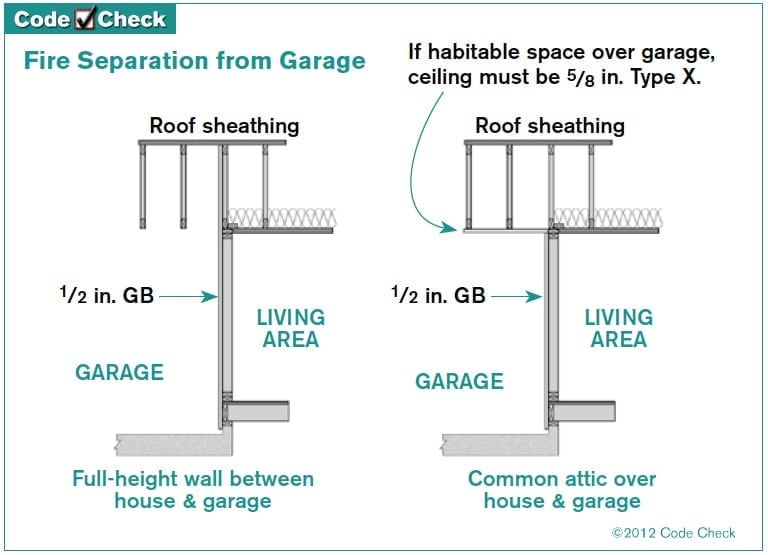
- Proper Materials: The walls between the garage and home should be covered with 1/2-inch gypsum board (drywall) on the garage side. If there is a room above the garage (like a bedroom or bonus room), the garage ceiling must be covered with 5/8-inch Type X drywall for added fire resistance.
- Wall Integrity: The walls between the garage and home should be fully intact with no holes or gaps. When the attic is shared between the garage and home, fire-rated drywall must still be in place to slow fire from spreading through the attic space.
- Fire-Rated Doors: The door leading from the garage to the house should be solid-core, fire-rated, and self-closing.
- No Direct Vents: There should be no open ducts or vents that connect the garage directly to living areas.
Why It Matters
These guidelines are designed to create a “buffer zone” that gives you and your family more time to respond in the event of a fire.
A properly installed fire separation wall is more than a code requirement, it’s an important safety feature that can buy you valuable time in an emergency. In many cases, it can mean the difference between a minor incident and a major tragedy.
At Ohio River Valley Home Inspections, we check for these crucial details during every inspection to make sure that you are fully informed about the things that matter most to you and your family’s safety.
Interested in learning more? Ohio River Valley Home Inspections is here to remove the guesswork with professional expertise that helps you sleep better at night. Check out our Frequently Asked Questions to learn more about how we can help you take the next step in your home buying journey.


 Ohio River Valley Home Inspections
Leave a comment