
When you’re buying a home, or making upgrades to the one you already have, the size of your water heater might not be the first thing on your mind. But choosing the right capacity can make a big difference in your comfort, energy bills, and daily routine.
In this guide, we’ll walk through how to match your water heater size to your household’s needs, so you always have enough hot water without paying for more than you use.
Why Water Heater Size Matters
A water heater that’s too small can leave you with cold showers and frustrated family members. Too big, and you’ll be paying to heat water you never use. Finding the right balance saves energy and ensures your household runs smoothly.
According to the Department of Energy, the average single-family American household uses about 45 gallons of hot water each day, but the exact amount depends on how many people live in your home and when you use the most water.
Quick Guide to Sizing by Household
Here is a general rule of thumb for standard storage tank water heaters:
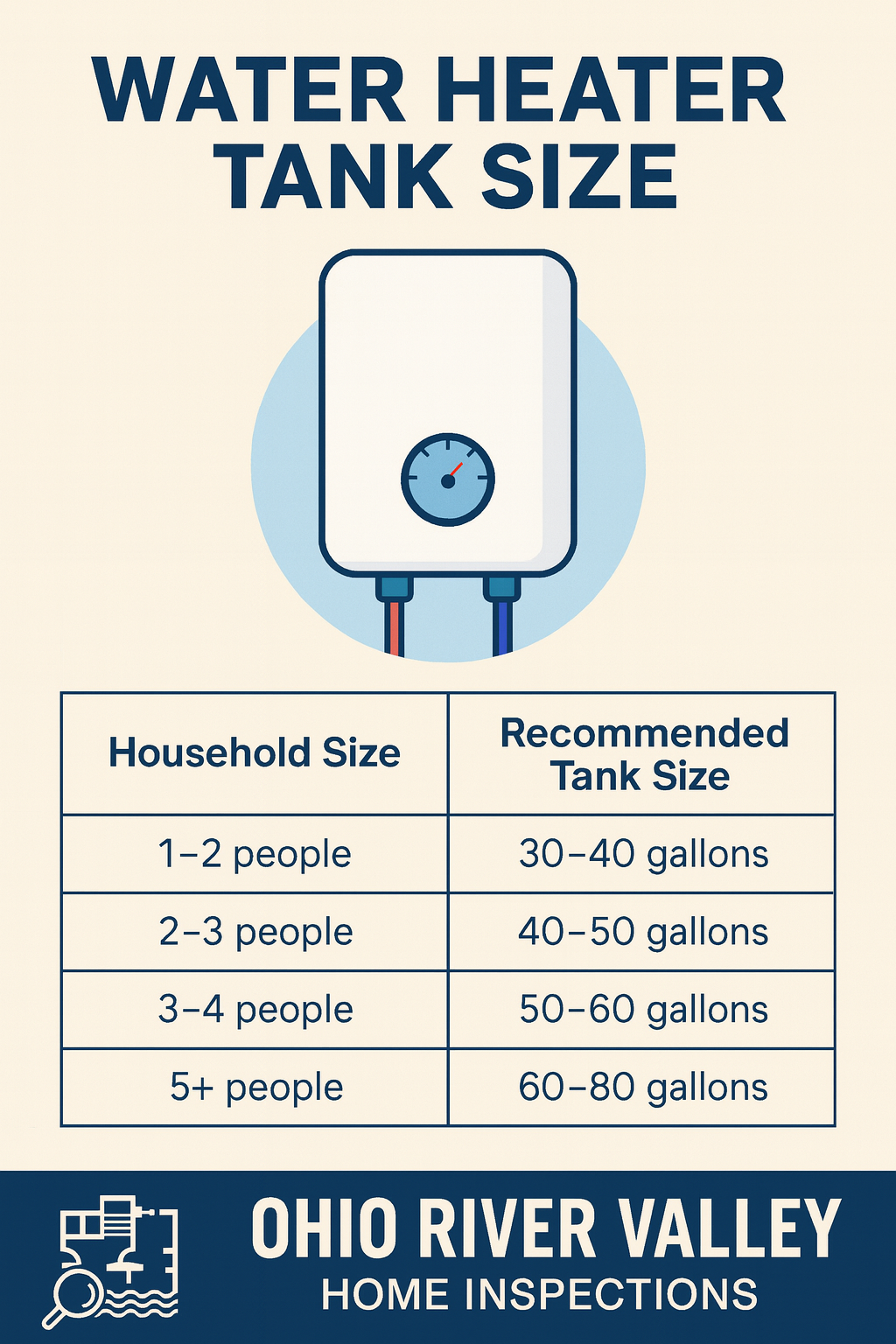
While every household’s needs will vary, these ranges cover most typical living arrangements. If your family takes long showers, does multiple loads of laundry daily, or runs the dishwasher often, you might want to size up.
Think About Peak Hour Demand
It’s not just how much hot water you use—it’s when you use it. Most families see their highest demand in the morning or evening when showers, laundry, and dishes might all be happening at once.
That’s where the First Hour Rating (FHR) comes in. This number, found on the water heater’s label, tells you how many gallons of hot water the unit can deliver in one busy hour. Choosing a water heater with an FHR that matches your peak needs helps ensure you won’t run out.
Balancing Efficiency and Comfort
A bigger tank gives you more hot water, but it also means higher energy costs. The right size should meet your needs during peak use without wasting energy the rest of the time.
If energy efficiency is a priority, you might also consider:
- High-efficiency models with better insulation and faster recovery times
- Tankless water heaters that heat water on demand instead of storing it
- Routine maintenance to keep your current water heater running efficiently
Final Thoughts
Whether you’re moving into a new home or replacing an old water heater, sizing it correctly is an important step toward comfort, efficiency, and peace of mind.
If you’re unsure what size your home needs, consider your household size, daily habits, and peak usage times. And if you have questions, your home inspector or a licensed plumber can help you choose a unit that’s the perfect fit.
Have other questions? At Ohio River Valley Home Inspections, we’re here to help you understand every part of your home so you can make confident decisions now and in the future. Feel free to contact us with any of your home buying or home maintenance needs.


 Ohio River Valley Home Inspections
Leave a comment